NVIDIA Rubin HPC Packs 50,000+ CUDA Cores — But You Can't Buy It Until 2028
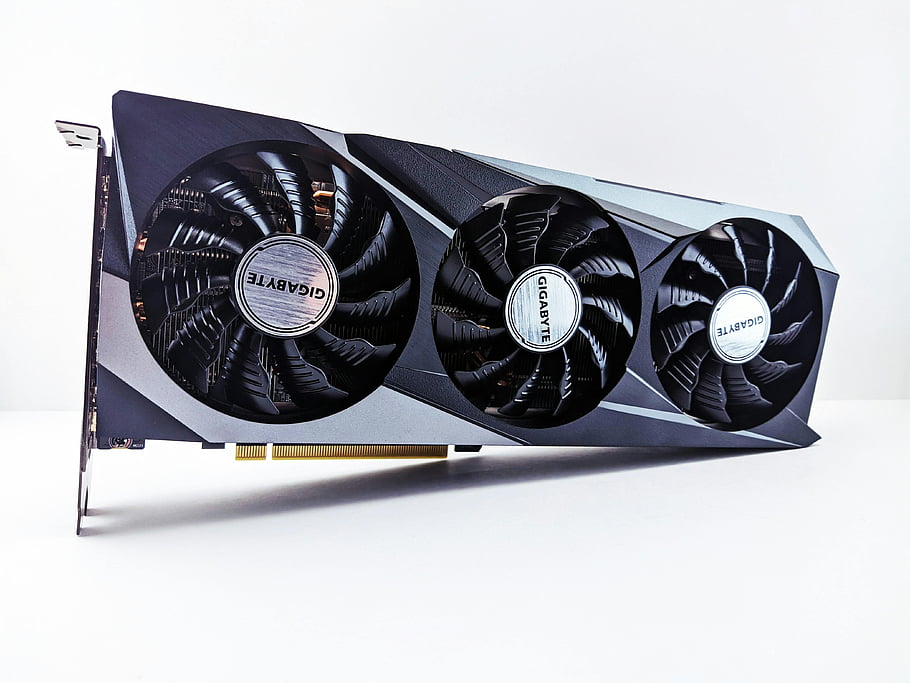
Photo: Hippopx (public domain). Illustrative image.
What happened. NVIDIA unveiled a new GPU, Rubin HPC, at the SC26 supercomputing conference in Chicago on 16 November 2026. It is a GPU in the company’s Vera Rubin platform — a set of five rack-scale systems — built for simulation and data processing in science, engineering and analytics, and explicitly aimed at the work that comes after an AI agent proposes an experiment or a design: running the simulation that tests it. The headline number is the core count: more than 50,000 CUDA cores on a single GPU, which NVIDIA says is a record for the company, alongside sparse-data acceleration and seventh-generation NVLink.
What we know — and what we don’t. For comparison, the current Rubin GPU carries 28,672 cores, 33 TFLOPS of FP64 performance and 288 GB of HBM4 memory, so Rubin HPC is roughly a doubling of the core count. But NVIDIA published no memory capacity, no power draw, no price, no FP64 rate and no benchmark figures for the new chip — every performance claim so far is NVIDIA’s own, and the only date given is availability “expected in 2028”. That is a long way off in a market where the same conference also heard about ASUS ramping volume shipments of Vera Rubin NVL72 systems this quarter. Rubin HPC is a statement of direction — agent-driven science needs simulation hardware that keeps up with the agents — rather than a product anyone can buy or benchmark today.
The wider SC26 picture. NVIDIA’s SC26 announcements came as a package. Alongside Rubin HPC, the company introduced the DGX Spark HPC Developer Kit — a four-node desktop cluster of DGX Spark systems for researchers — expanded its CUDA-X libraries, and launched Nemotron for Science, an open model and chemistry dataset bundle for building science agents. The through-line is NVIDIA’s bet that the next bottleneck in science is not the model that proposes a molecule or a material, but the simulation that checks it. Rubin HPC is the hardware side of that bet; Nemotron for Science is the software side.
Why it matters. A GPU with 50,000 cores sounds like a bigger number for its own sake, but the framing matters more: NVIDIA is pitching it as the machine that closes the loop between AI agents and physical simulation. If agents are going to design experiments, someone has to run them — and run them fast enough that the agent can iterate. That is also why the 2028 date is worth noting plainly: the agents are here now, the simulation hardware that matches them is two years out, and in the meantime the work runs on today’s Rubin systems and on desktop clusters like DGX Spark. The supercomputing story this week is less about one chip and more about the shape of the stack — as the Blackwell GPU fingerprint story showed, the hardware underneath a model now leaves a trace in the model itself.
Sources
- NVIDIA — “NVIDIA at SC26” (NVIDIA Blog, 16 November 2026): https://blogs.nvidia.com/sc26-news/
- FreshSynapse — “NVIDIA’s Nemotron for Science Brings Open AI Agents to the Chemistry Lab”: https://freshsynapse.com/articles/nvidia-nemotron-for-science-chemistry-agents-2026-11-17/
- FreshSynapse — “Blackwell GPU Fingerprints Found in Six Chinese Models”: https://freshsynapse.com/articles/blackwell-gpu-fingerprints-chinese-models-2026-11-15/