ChatGPT for Healthcare Gets Computer-Use Agents and 20+ Plugins
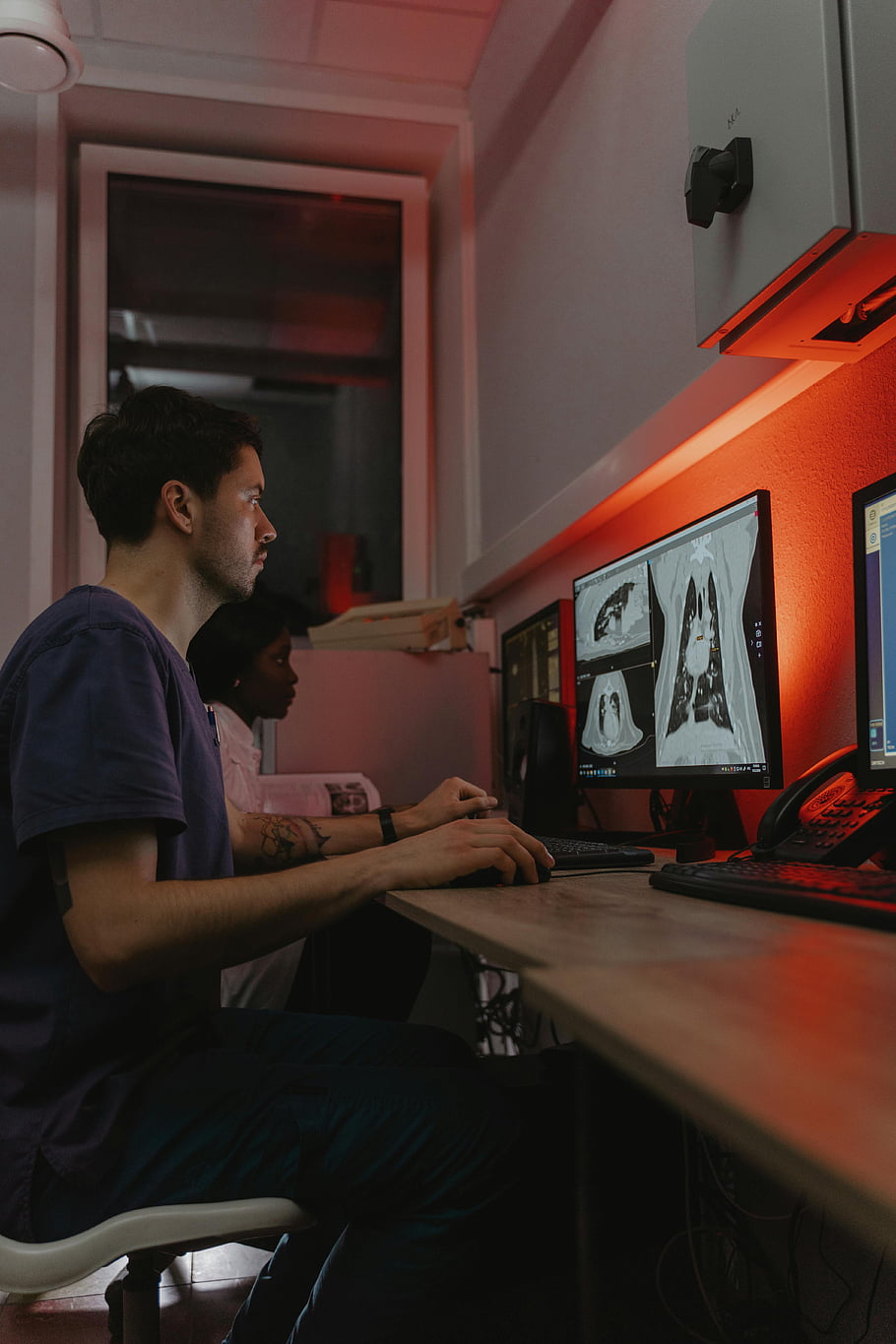
Photo: Hippopx (public domain). Illustrative image.
What happened. OpenAI announced on 16 November 2026 that computer-use agents — AI that reads screens, clicks, types and moves between applications — are now available for healthcare teams, alongside more than 20 new plugins and upgraded clinical search in ChatGPT for Healthcare. The agents work through the OpenAI API, ChatGPT for Healthcare, ChatGPT for Clinicians, ChatGPT Work and Codex, and were announced at the HLTH26 conference. The idea is simple: healthcare work is fragmented, and much of it still means a person copying information between systems that do not talk to each other. An agent that can operate the existing software is supposed to do that copying instead.
The safety numbers are the headline. OpenAI evaluated GPT-6 Astra on multi-step tasks clinicians handle in their EHR inboxes, shaped by physician input. Reviewers examined the model’s actions alongside the notes, orders and patient messages it produced. Overall, 99% of 325 reviewed tasks were rated clinically safe, and physicians rated the work “very helpful” or “extremely helpful” in 93% of 646 assessments. Two caveats matter. First, these are OpenAI’s own evaluations of simulated clinical work, not measured patient outcomes. Second, the safety bar was whether inaccuracies or omissions could plausibly lead to patient harm — a high bar, but a narrow one. On cost, the independent Stanford benchmark HealthAdminBench scored Astra at 94.3% of available rubric points on administrative workflows, while GPT-6 Luna earned 91.8% at 8.5 cents per task — 98% cheaper than Astra. For a plain-English explainer of the technology underneath, see What Is a Computer-Use Agent?.
The pilots are where the story gets concrete. CVS Health is using the agents to automate repetitive work across clinical systems, including sending documents, processing referrals and supporting specialist consults. In one production workflow, OpenAI says an agent cleared a months-long document-sending backlog over a weekend; another handles the system steps for tens of thousands of consults each day. CVS is open-sourcing its Agent Kit, built with OpenAI’s Agents SDK, so other organisations can repeat the approach. Cigna Healthcare is using computer use to gather member context for care managers who previously had to navigate more than 10 separate clinical and administrative systems. Ambience has built extra controls so the agent stops and asks the clinician when a record is ambiguous, and waits for approval before submitting anything. Abridge is developing agents that coordinate care plans across the applications clinicians use daily, including ones with no API at all.
The plugin expansion fills in the other half. A companion announcement adds more than 20 plugins to ChatGPT for Healthcare, including through ChartGPT, which brings ChatGPT into the EHR workflow: Aiva, Amion, Assort Health, Availity Extend, Elation Health, Ferry Health, IMO Health, Infinitus Relay, KMED, Luma Health, Metriport, Notable, Oracle HDI, PenguinAI, Photon, Redox, Stedi, Subsalt, TriZetto, Turquoise and UpToDate Expert AI. The plugins cover clinical reference, scheduling, insurance verification, pharmacy work and revenue-cycle tasks — Luma plus TriZetto for appointment confirmation and eligibility, Metriport plus UpToDate for post-discharge medication monitoring, Turquoise plus Stedi for MRI site cost comparison. Workspace administrators must enable the new plugins, and individual ChatGPT for Clinicians users get a selection rather than the full set. Clinical search is also upgraded, with better evidence retrieval, evaluation and citations. ChatGPT for Clinicians is free for eligible verified US clinicians; organisations need a Business Associate Agreement for HIPAA-compliant workflows, and OpenAI says organisation data is not used to train its models.
Why it matters. This is the clearest sign yet that the agent race has moved from demos to drudge work — and healthcare admin, where a single MRI authorisation can span an EHR, a payer portal and a fax queue, is the most demanding test of that idea. The 99% safety figure will be quoted everywhere, but the honest read is narrower: OpenAI has shown an agent can do paperwork carefully in a controlled evaluation, with humans still reviewing the outputs. The CVS backlog story is the more telling number — a weekend of agent work clearing months of queue — because it is a production result, not a benchmark. The pattern is the same one behind Claude Meetings joining Google Meet as a visible participant and the wider AI teammate wave: AI that sits inside the tools people already use, rather than asking them to move to a new one.
Sources
- OpenAI — “Advancing computer-use agents for healthcare teams” (16 November 2026): https://openai.com/index/advancing-computer-use-for-healthcare-teams/
- OpenAI — “More ways to move care forward with ChatGPT for Healthcare” (16 November 2026, companion announcement; plugin list and clinical-search upgrade as reported by Subagentic and ExplainX): https://subagentic.ai/posts/openai-healthcare-computer-use-agents/
- FreshSynapse — “What Is a Computer-Use Agent?”: https://freshsynapse.com/articles/what-is-a-computer-use-agent/
- FreshSynapse — “Claude Meetings Joins Google Meet as a Visible Participant”: https://freshsynapse.com/articles/claude-meetings-beta-google-meet-2026-11-15/
- FreshSynapse — “What Is an AI Teammate?”: https://freshsynapse.com/articles/what-is-an-ai-teammate/