Six Chinese AI Models Carry Blackwell GPU 'Fingerprints' in Their Weights, Forensic Report Finds
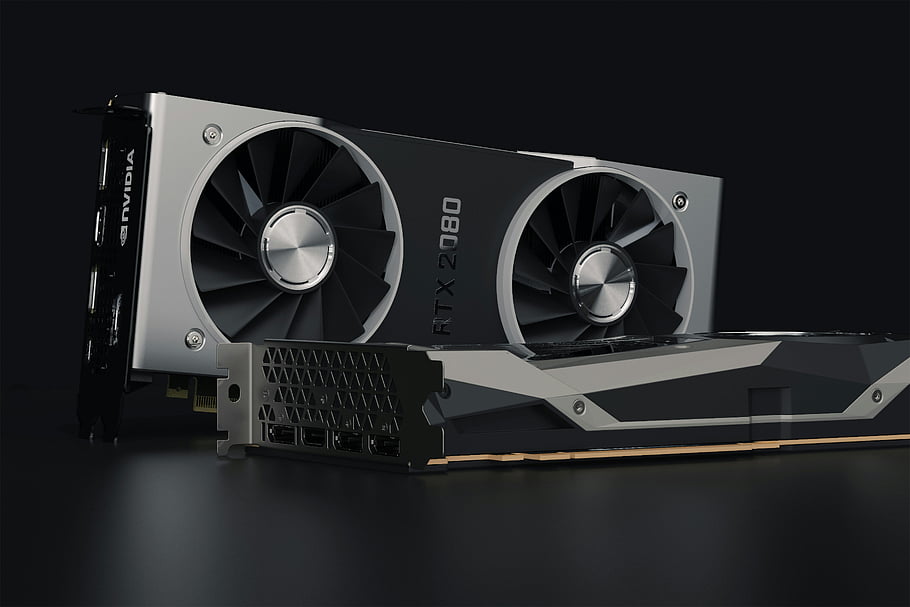
Photo: Hippopx (public domain). Illustrative image.
What happened. A forensic report published on 12 November 2026 claims that six frontier open-weight models from Chinese labs were initialised on Nvidia Blackwell GPUs — the most advanced chips the US restricts from export to China. Will DePue at Unemployment Labs analysed the published model weights and found initialiser patterns matching Blackwell streaming-multiprocessor counts (148 or 152 SMs), while earlier releases from the same companies still match the older Hopper generation (132 SMs). TechCrunch recapped the report on 13 November, and an independent engineer has since published a CPU-only script that reproduces the same findings.
How weights can carry a GPU signature. Modern models start training from billions of pseudo-random initial values. In the PyTorch stacks most frontier labs use, the Philox seeding runs through cuRAND workers mapped to streaming multiprocessors — so the SM count of the GPU leaves a trace in where the same seed lands numbers in a matrix. Training updates most weights, but untouched rows and weak residual orderings can survive, enough to search trillions of seed-and-layout pairs and test hold-out tensors. For DeepSeek-V4-Flash, a Blackwell B300 reproduced 461 of 469 selected weight rows — 445 of them bit-for-bit. The report’s weakest hold-out test cleared 20 sigma, where accidental peaks in a search space of roughly six trillion pairs should top out near 8 sigma, by the authors’ model.
Which models flipped. The report’s table is the anchor: DeepSeek-V4-Flash (April 2026) and V4-Pro read as Blackwell, while V3 from December 2024 reads as Hopper, which the lab itself disclosed. Moonshot’s Kimi K2 reads as Hopper; Kimi K3 (July 2026) and K3.1-Pro read as Blackwell. MiniMax-M2.7 reads as Hopper; M3 reads as Blackwell. Ant Group’s Ling-3.0-flash reads as Hopper; Ling-3.1-flash (October 2026) reads as Blackwell. The same study found no Blackwell fingerprint in DeepSeek-V4.1-Flash despite an exhaustive search, and none in Meituan’s LongCat-2.0, which the company says it trained on domestic AI ASIC superpods. Other labs’ newest weights — Alibaba’s Qwen, Zhipu, Tencent, Xiaomi, StepFun — still read as Hopper.
What it does not prove. The authors are explicit about scope, and the article must be too: the report shows access to Blackwell-class hardware at initialisation, not proof of smuggling, not proof of where the GPUs sat, and not proof that every training flop ran on Nvidia silicon. Blackwell-class parts require US licences for export to China, and the authors note no reported licences for those six lines — but that is a policy juxtaposition, not a legal finding from weights. The method also has blind spots: initialisation on a CPU, or on Baidu’s PaddlePaddle framework, leaves no Nvidia trace at all, which is why several Qwen3 variants and Baidu’s ERNIE models cannot be tested this way. What the report does provide is a falsifiable artifact: when a lab claims Hopper-only training but ships a checkpoint whose preserved rows peak at 152 SMs, outsiders can ask for cluster logs instead of taking a blog post’s word for it. That lands in the same week Jensen Huang resigned as Nvidia’s CEO — and the two stories together make the chip-supply question the week’s biggest unresolved thread.
Sources
- Unemployment Labs (Will DePue) — “Checkpoint Forensics” (12 November 2026): https://unemploymentlabs.com/checkpoint-forensics
- ExplainX — “Blackwell GPU Fingerprints in DeepSeek & Kimi Weights (2026)” (13 November 2026): https://explainx.ai/blog/chinese-open-weights-blackwell-gpu-checkpoint-forensics-november-2026
- FreshSynapse — “Jensen Huang Resigns as Nvidia CEO After 33 Years”: https://freshsynapse.com/articles/jensen-huang-resigns-nvidia-ceo-2026-11-13/
- FreshSynapse — “Kimi K3.1-Pro Arrives as Open Weights”: https://freshsynapse.com/articles/kimi-k3-1-pro-open-weights-2026-11-05/
- FreshSynapse — “Nvidia Board Reportedly Preparing to Oust Jensen Huang”: https://freshsynapse.com/articles/nvidia-board-reportedly-preparing-oust-jensen-huang-2026-11-12/