Gemini Robotics 2.5 Hits 96% on a Mercedes-Benz Factory Line — Google's Most Capable Robot Model Yet

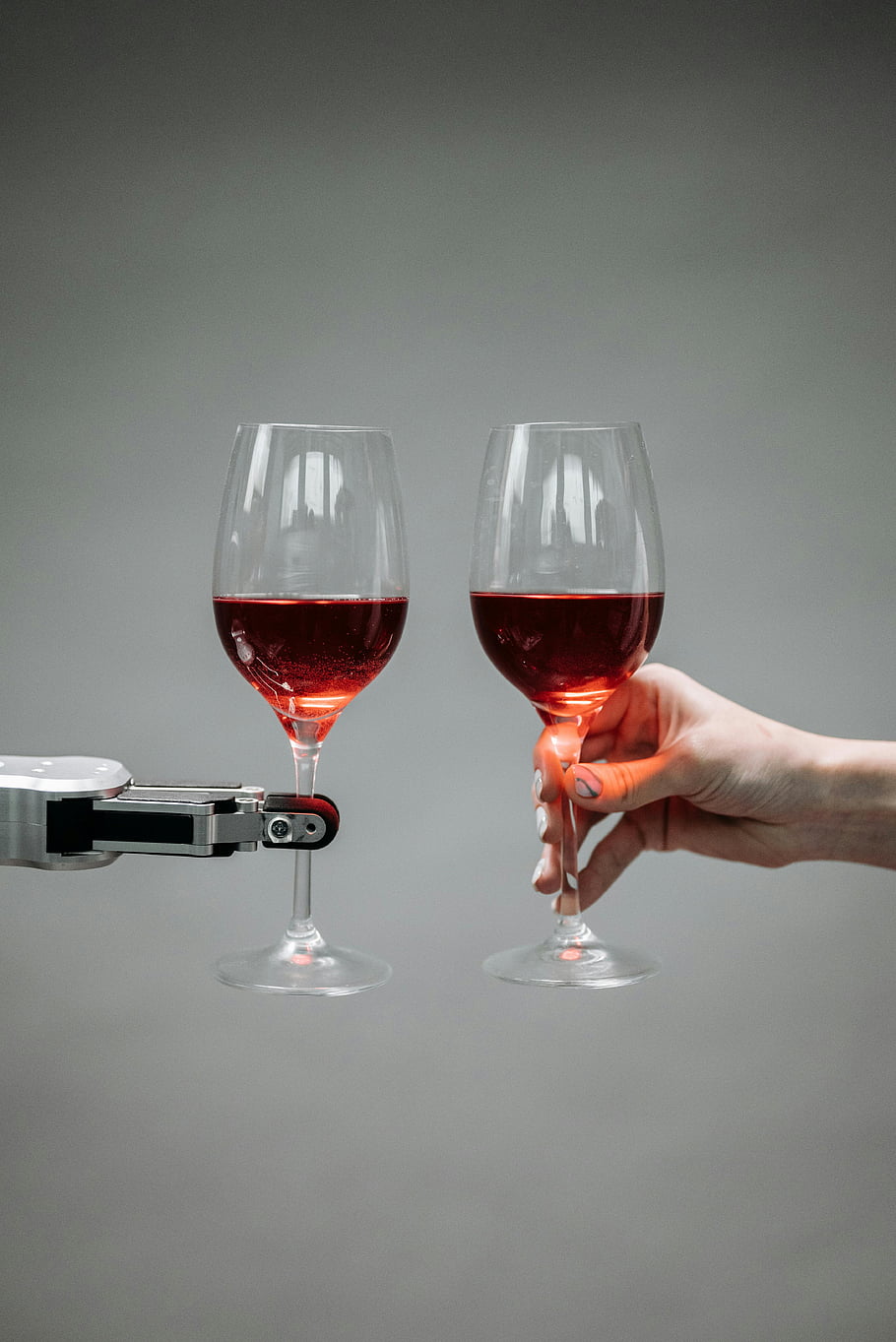
Photo: Hippopx (public domain). Illustrative image.
What happened. Google DeepMind introduced Gemini Robotics 2.5 on 10 November 2026, its most capable vision-language-action (VLA) model to date — the kind of model that takes what a robot sees and what it is told to do, and turns both into physical actions. The announcement’s proof point is not a lab demo but a factory floor: Apptronik Apollo 2 humanoids running the model on active Mercedes-Benz production lines in Kecskemét, Hungary and Sindelfingen, Germany achieved a 96% success rate at automotive kitting.
What the model does better. DeepMind tested Gemini Robotics 2.5 across more than 200 distinct tasks — serving food with tongs, tying a bow on a gift box, pipetting liquid — chosen to stretch dexterity, reliability and task complexity. Compared with previous baselines, it achieves a 30% to 100% higher success rate depending on the type of task, while completing tasks 20% to 30% faster. The gains come in three areas, according to DeepMind: dexterity with everyday tools and delicate, flexible objects; reliability in unstructured environments; and safety. Like earlier Gemini Robotics models, it works natively with many robot types, including Apptronik’s Apollo 2 humanoid — with a five-finger, 22-degree-of-freedom SharpaWave hand — and the Franka Duo platform with two-fingered parallel grippers.
The factory test. Kitting is the repetitive, physically taxing job of sorting individual parts from bulk bins into organised trays in the exact order each vehicle on the line needs. In the proof-of-concept, Apollo 2 autonomously reaches into supply bins, picks up metal automotive brackets and places them into sequencing containers, correcting for gaps as it goes — using DeepMind’s embodied reasoning model, Gemini Robotics ER, to track the workflow and Gemini Robotics 2.5 to control its hands and arms. The 96% success rate is the number that matters: it is high enough to be useful on a live line, where offloading monotonous prep work lets technicians focus on complex build tasks. DeepMind is careful to call it a proof-of-concept, not a deployment — the model is rolling out to robotics partners, with no public API date given.
Safety is part of the release, not an afterthought. Gemini Robotics 2.5 uses inference-time reasoning guidance to steer around physical hazards in real time — much as safety classifiers add a protective layer around a chatbot’s responses. In DeepMind’s evaluations, that guidance boosted safe task completion around obstacles by 33% and around nearby people by 43%. The team is also releasing ASIMOV-Jailbreak, a new open-source benchmark of hundreds of prompts that disguise unsafe requests across dozens of scenes. On it, Gemini 4 Argon achieves 99.5% jailbreak resistance, against 82% for the previous baseline, Gemini Robotics ER 2. Argon also leads DeepMind’s agentic robotics evaluations on unsafe task refusal, resolving uncertainty and working near humans.
How it was built faster. Gemini 4 Argon acted as a simulation engine that accelerated development: it can generate thousands of varied simulated practice runs from a real-world camera scene and build a realistic digital twin, combined with real training demonstrations, so the robot generalises to new scenes and objects more quickly. Argon can also hypothesise why failures happen from video footage and test the best improvements in simulation and directly on real robots.
Why it matters. Gemini Robotics 2.5 is the week’s clearest sign that the robot-model race has moved from demos to production lines — the same week Alibaba’s Qwen4-Max pitched itself as a 24/7 AI teammate for desk work. The open-weight counterpoint is Runway’s Praxis-1, released days earlier with downloadable weights. For the plain-English version of what a VLA model actually is, see What Is a VLA Model?.
Sources
- Google DeepMind — “Gemini Robotics 2.5: Accelerating Physical Intelligence” (10 November 2026): https://deepmind.google/blog/gemini-robotics-2-5-accelerates-real-world-physical-intelligence/
- FreshSynapse — “Qwen4-Max Is Here: Alibaba’s 2.4T-Parameter Flagship Cuts Agent Costs 62%”: https://freshsynapse.com/articles/qwen4-max-alibaba-flagship-ai-teammate-2026-11-16/
- FreshSynapse — “Runway Praxis-1: The Open-Weights Robot Model”: https://freshsynapse.com/articles/runway-praxis-1-open-weights-robot-model-2026-11-12/
- FreshSynapse — “What Is a VLA Model? Vision-Language-Action Models Explained in Plain English”: https://freshsynapse.com/articles/what-is-a-vla-model/