What Is a Diffusion Model? How AI Turns Noise Into Images, in Plain English
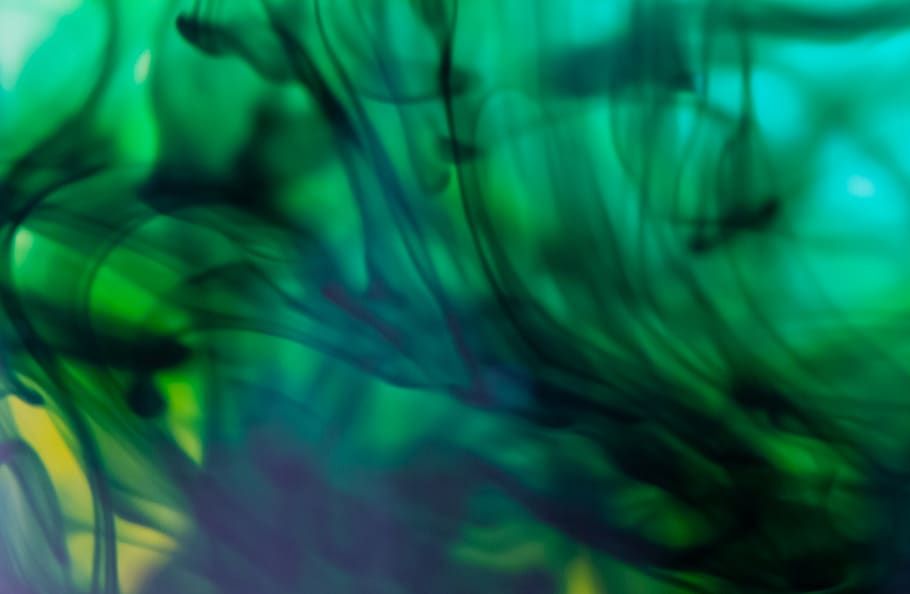
Photo: Hippopx (public domain). Illustrative image.
What is a diffusion model?
A diffusion model is a type of AI model that creates images — and now video and audio — by learning to reverse a process of adding noise. It is the engine behind Stable Diffusion, Midjourney and Flux, and behind most of the AI images you have seen. The idea is simple enough to state in one sentence: take a picture, gradually add random noise to it until it is pure static, and teach a neural network to run that process backwards — from static, step by step, back to a picture.
The formulation comes from a 2015 paper by Sohl-Dickstein and colleagues, who borrowed the mathematics from physics: diffusion is what happens when ink spreads through water, or heat spreads through metal. But diffusion models only took off in 2020, when Ho, Jain and Abbeel showed in “Denoising Diffusion Probabilistic Models” that the approach could produce high-quality images, sometimes better than the GANs — generative adversarial networks — that had dominated image generation until then. The paper is now one of the most cited in modern AI.
How does it actually generate an image?
Generation starts with nothing but noise: a grid of random static. The model then denoises it in many small steps — typically dozens, sometimes hundreds. At each step it looks at the current, slightly-less-noisy image and predicts what noise to remove next, guided by your text prompt. Early steps decide the big structure — where the horizon goes, where the person stands. Later steps fill in the details: the texture of fabric, the glint in an eye, the lettering on a sign.
This is why generating an image takes a few seconds rather than being instant. Each step is a full pass through a large neural network, and the steps are sequential: you cannot do step 20 before step 19. It is also why image models can be slow to iterate — and why faster samplers, which take fewer, smarter steps, are an active area of research.
What does “denoising” mean?
Denoising is the model’s only job, and it learns it by practice. During training, the model is shown millions of images with known amounts of noise added, and it learns to predict the noise that was added. If it can predict the noise, it can subtract it. Do that repeatedly, starting from pure noise, and a picture emerges. The model never sees a clean image and copies it; it learns the statistical patterns of what images look like — what faces, landscapes and objects have in common — and reconstructs something new from those patterns.
Diffusion vs GANs
Before diffusion, the standard image generator was the GAN: two networks, a generator and a discriminator, trained against each other — one making images, the other judging them. GANs could produce stunning images, but they were famously hard to train: the two networks could fall into a rut where the generator produced the same few images over and over (mode collapse), or training simply failed. Diffusion models train more stably, because the task — predict the noise — is the same at every step and has a clear right answer. They also cover more variety: a diffusion model is less likely to ignore whole categories of images. The cost is speed: a GAN generates an image in one pass, while diffusion needs many.
Frequently asked questions
Why does image generation take several seconds? Because diffusion is iterative. The model denoises the image step by step, and each step is a full pass through a large network. Fewer steps means faster generation but lower quality, which is why “steps” is a setting you can tune in tools like Stable Diffusion.
Is a diffusion model the same as an LLM? No, but they are cousins. Both are neural networks trained on vast amounts of data, and modern image models often use a transformer to do the denoising. An LLM predicts the next word; a diffusion model predicts the noise to remove. The text prompt you type is understood by a language model first, then handed to the diffusion model as guidance.
Where is diffusion used today? Images first — Stable Diffusion, Midjourney, Flux, DALL-E — but the same idea now generates video (the frames are denoised together so motion stays consistent), audio (music and speech are denoised waveforms), and even 3D shapes and molecules. Anywhere the data can be noised and un-noised, diffusion is a candidate.
Can a diffusion model copy an image from its training data? It can come close. Diffusion models can memorise training images, especially ones repeated many times in the data, and reproduce them near-exactly. That is why training-data provenance and copyright are live legal questions for image generators, and why some models are trained on licensed or filtered data.
Sources
- Ho, Jain & Abbeel — “Denoising Diffusion Probabilistic Models” (2020), arXiv:2006.11239: https://arxiv.org/abs/2006.11239
- Sohl-Dickstein et al. — “Deep Unsupervised Learning using Nonequilibrium Thermodynamics” (2015): https://www.freecodecamp.org/news/ai-paper-review-deep-unsupervised-learning-using-nonequilibrium-thermodynamics/
- Lai et al. — “Principles of Diffusion Models” (arXiv:2510.21890, revised August 2026): https://arxiv.org/abs/2510.21890
- FreshSynapse — “What Is a Transformer?”: https://freshsynapse.com/articles/what-is-a-transformer/
- FreshSynapse — “Midjourney vs Flux (FLUX.2): Which AI Image Generator Should You Pick in 2026?”: https://freshsynapse.com/articles/midjourney-vs-flux-2026-11-21/
- FreshSynapse — “What Are Large Language Models?”: https://freshsynapse.com/articles/what-are-large-language-models/