OpenAI's MedChemBench Tests AI on Real Drug Discovery — GPT-6.2 Astra Leads at 84.5%
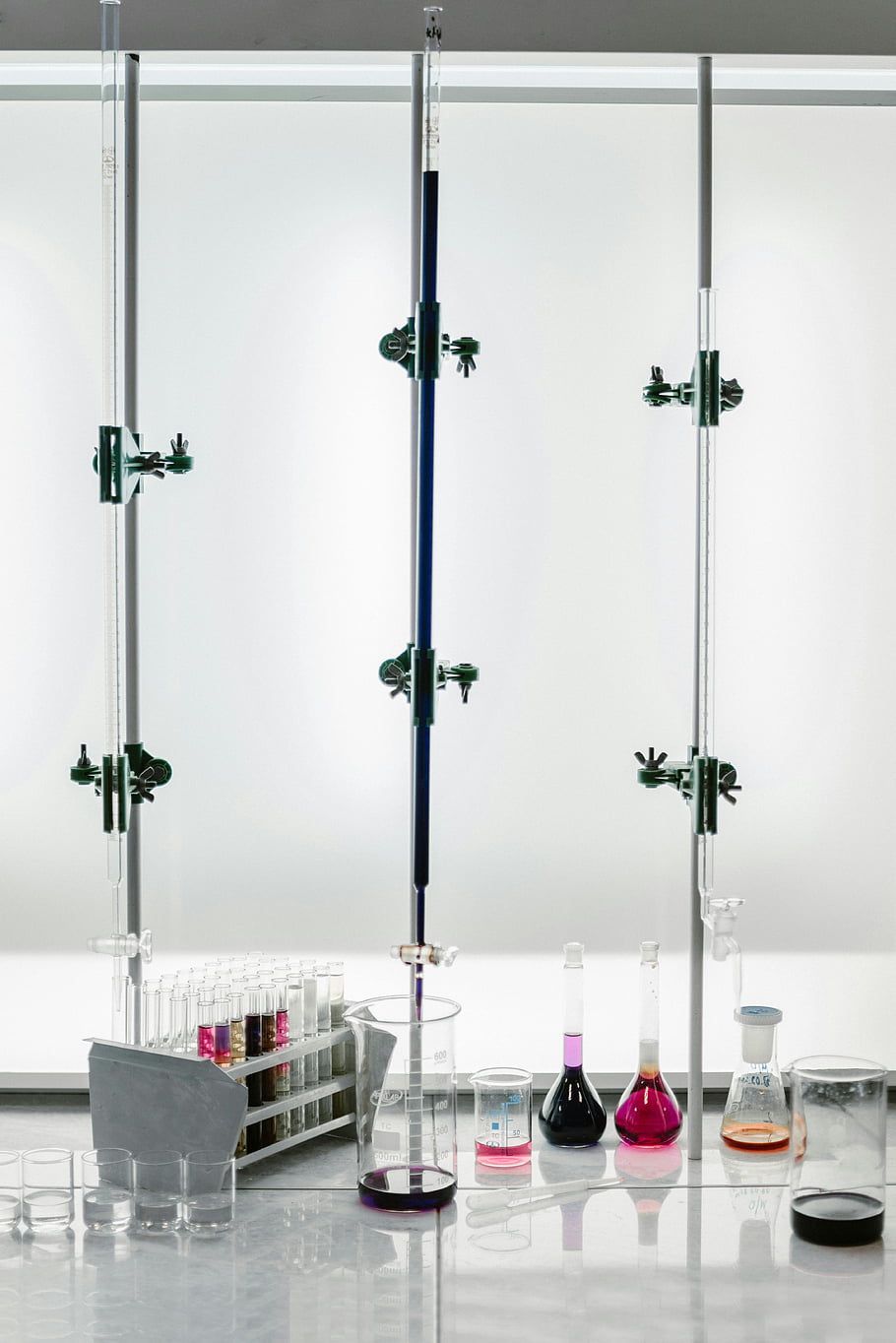
Photo: Hippopx (public domain). Illustrative image.
The benchmark. OpenAI has published MedChemBench, a benchmark that tests AI models on the actual work of medicinal chemistry rather than on textbook questions. It contains 99 problems drawn from 117 published papers and patents, spanning 761 distinct molecular structures, in seven categories: integrated lead selection (48 problems), SAR forecasting (26), ADME and delivery (8), safety (4), molecular design (6), assay biology (3) and retrosynthesis (4). The paper is dated 9 November 2026 and was written by OpenAI authors. It follows OpenAI’s earlier BioBasicsBench, which tested models on biology fundamentals.
The scores. The paper’s highest mean score is 83.83% for GPT-6 Astra at maximum effort. Across the eleven models evaluated at the shared “xhigh” setting, scores ranged from 35.02% to 83.33%. OpenAI’s 20 November announcement put GPT-6.2 Astra — the newer model — at 84.5%, a figure reported by secondary outlets citing OpenAI; the 9 November paper predates that model, so the two numbers come from different releases and should not be read as a single ranking. All scores are OpenAI’s own reported results.
The catch. The headline number hides a split. GPT-6 Astra scores 95.4% on molecular reconstruction — rebuilding a molecule from its description — but only about 50% on compound selection and numerical property prediction, the judgement calls that decide which molecule is actually worth making. OpenAI is explicit about the limit: the results “do not establish whether models can discover new drugs”. The benchmark measures reasoning from historical evidence, and the models may already have seen the published sources the problems are drawn from — prior exposure cannot be ruled out.
Why it matters. Drug discovery is one of the most consequential places AI is being applied, and it is also one where a good benchmark score can mislead: a model that can reconstruct molecules is not the same as a model that can pick the right one. MedChemBench is valuable precisely because it separates those skills, and because it is built from real papers and patents rather than synthetic tasks. The benchmark measures reasoning from historical evidence, and the models may already have seen the published sources the problems are drawn from — which is why OpenAI’s caveat matters. It arrives in a week when AI drug discovery is attracting serious money — Isomorphic Labs raised $5 billion in its Series C — and it gives that money something concrete to measure against. The honest reading of the results is that frontier models are now strong at the chemistry, and still roughly coin-flip at the decisions that make a drug.
Sources
- OpenAI — “MedChemBench” paper (9 November 2026): https://cdn.openai.com/pdf/09c4ec60-a32e-4652-837b-1811368a3bb0/medchembench-paper.pdf
- FreshSynapse — “Isomorphic Labs Raises $5 Billion Series C for AI Drug Discovery”: https://freshsynapse.com/articles/isomorphic-labs-5bn-series-c-ai-drug-discovery-2026-11-18/
- FreshSynapse — “What Is an AI Reasoning Model?”: https://freshsynapse.com/articles/what-is-an-ai-reasoning-model-test-time-compute/