Nvidia's GR00T 2 Teaches Robots New Skills by Watching Human Video
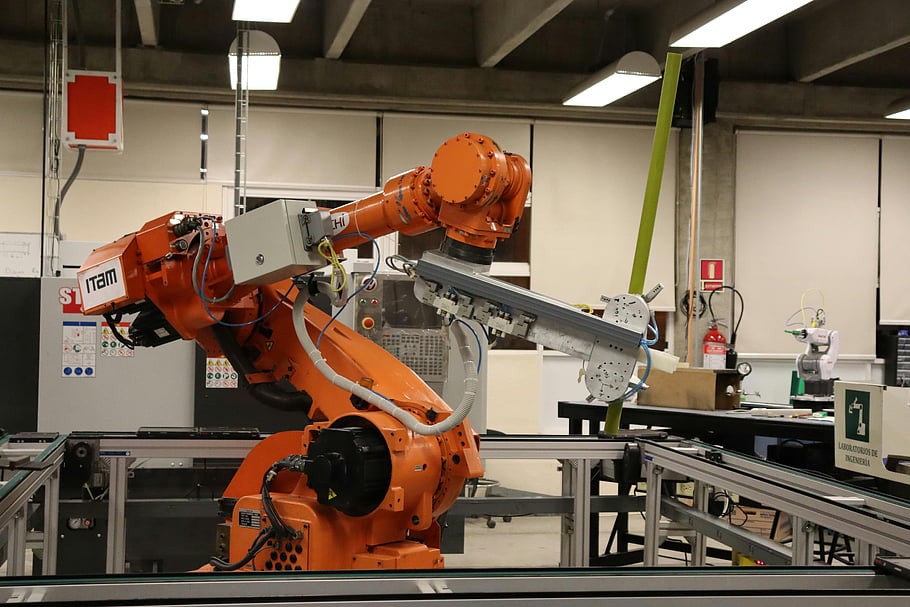
Photo: Hippopx (public domain). Illustrative image.
What happened. Nvidia unveiled GR00T 2 on Monday 9 November 2026 at the Conference on Robot Learning (CoRL) in Austin, Texas — the first day of a conference running until 12 November. GR00T 2 is the next generation of Nvidia’s robot foundation models, and the company calls it an “open frontier world action model”. It was presented by Jim Fan, Nvidia’s director of robotics, in a keynote titled “From Dreaming to Doing: World Action Models and Agentic Robotics”. Alongside it, Nvidia released version 3.0 of its Isaac Lab robot-training framework and two new open benchmarks for testing robot behaviour.
How it works. GR00T 2 is a world action model: it predicts the next few frames of video together with the robot’s next actions, then executes the actions it has just imagined. It is built on Nvidia Cosmos, the company’s world-model platform, and uses a 2-billion-parameter transformer. One pretrained checkpoint covers parallel-gripper arms, dexterous hands and a humanoid body, and AI agents can call the model’s interface to run skills in sequence and recover from errors.
Learning from watching people. The core idea is that robots can learn delicate hand skills from human video rather than from robot-only training. The pretraining mix includes 402,730 hours of first-person human video, 10,184 hours of handheld gripper demonstrations across 2,897 tasks, and 23,500 hours of robot teleoperation. Nvidia is releasing 100,000 hours of that human egocentric video as open source, including video, language annotations and head and hand motion data, under a CC BY 4.0 licence. The point is scale: human video is far more plentiful than robot demonstration data, and GR00T 2 is built to transfer what it sees people do onto robot bodies that have never practised the task.
What Nvidia says it can do. The headline numbers are Nvidia’s own, from its own evaluations. GR00T 2 completed 40 of 50 evaluated tasks at least once with no task-specific demonstrations. With one demonstration per task, average success across those 50 tasks was 71%; with five demonstrations, it reached 95%. The model ranks among the top three across the RoboCasa365, RoboLab, RoboDojo and MolmoSpaces benchmarks, with multiple leaderboard wins, according to Nvidia. No independent replication of these results has been published, and the tasks were chosen by Nvidia.
From the lab to the factory floor. Nvidia named early testers rather than production customers, and the distinction matters. Nexuni is testing GR00T 2 for robotic laundry handling, Foxconn is applying it to server-manufacturing automation, and Siemens is evaluating it across industrial use cases. MicroAGI is using a reinforcement-learning post-trained version to swap Ethernet cables with a YAM robotic arm. None of these is announced as a production rollout.
The open release — and what is still missing. Nvidia says the GR00T 2 and GR00T 2 Turbo weights will be released as open source in December, together with the training recipe for cross-embodiment transfer. But the research page lists code only as “Available in December” and no licence terms for the weights have been published yet, so the openness of the release cannot be judged until December. What is available now is the data, the simulation tooling and the benchmarks.
Isaac Lab 3.0 and the benchmarks. Isaac Lab 3.0, Nvidia’s open-source robot-learning framework, became generally available on 20 October 2026. The new release adds the Newton physics engine, lets AI agents set up training environments, switch between the PhysX and Newton solvers, and apply a new reinforcement-learning post-training library to foundation models such as GR00T. Nvidia says it reaches up to 2.5 times the training throughput of Isaac Lab 2.3 on a dexterous manipulation benchmark — again, a vendor figure. The two new benchmarks, DexBench (15 tasks across four industrial scenes) and VABAR (six industrial tasks with standardised variations), run inside Isaac Lab-Arena and are meant to give the field a shared way to compare robot policies in simulation.
Why it matters. Dexterous manipulation — picking things up, handling cables, folding laundry — has been the hard edge of robotics, because every new task traditionally needed its own demonstrations on the same robot. If a model can genuinely learn a new manual skill from a handful of human videos, the cost of teaching robots new jobs collapses. GR00T 2 is a serious attempt at that, with the data and the benchmarks to let others test the claim. The December open release is the moment to watch: until the weights and licence land, the headline numbers are Nvidia’s alone.
Sources
- Nvidia Blog — “Practice Makes Precise: At CoRL, NVIDIA and Partners Reveal How Robots Rehearse Delicate Work in Simulation” (9 November 2026): https://blogs.nvidia.com/blog/robotics-simulation-advancements-corl/
- Unite.AI — “NVIDIA Introduces GR00T 2 for Robots Learning From Human Video” (9 November 2026): https://www.unite.ai/nvidia-introduces-gr00t-2-for-robots-learning-from-human-video/
- MLQ.ai — “Nvidia launches GR00T 2, a robot model that learns new skills from human video, and Isaac Lab 3 at CoRL” (9 November 2026): https://mlq.ai/news/nvidia-launches-gr00t-2-a-robot-model-that-learns-new-skills-from-human-video-and-isaac-lab-3-at-corl/
- Humanoids Daily — “‘Robotics Is No Longer an Elitist Sport’: NVIDIA Unveils GR00T 2 and Open-Sources the Stack Behind It” (9 November 2026): https://www.humanoidsdaily.com/news/nvidia-gr00t-2-world-action-model-corl-2026